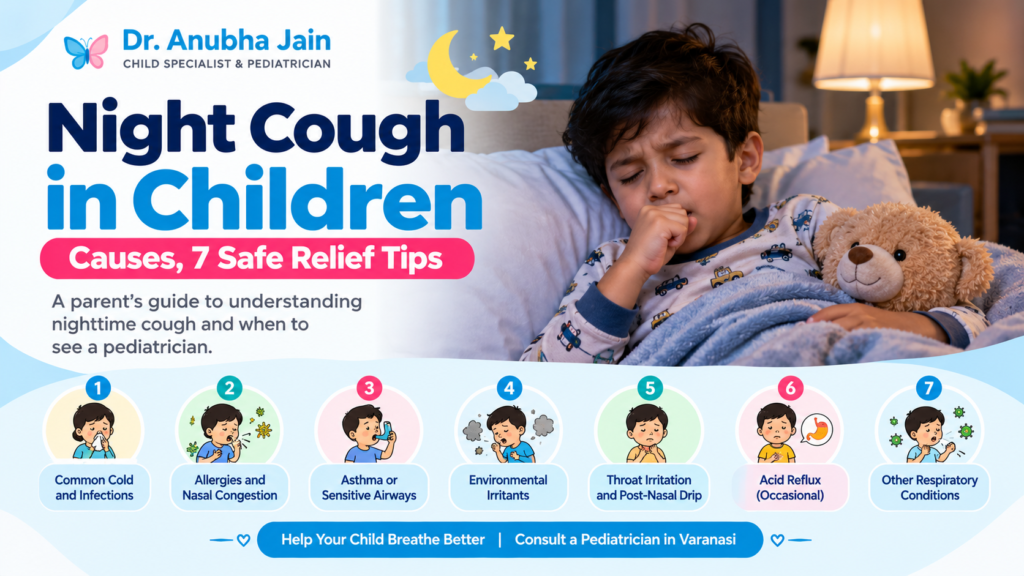
Night cough in children can worry parents, especially when repeated coughing interrupts sleep. A child may seem comfortable during the day but start coughing after lying down, during the night or early in the morning.
There are several possible reasons for a child coughing at night. Common causes include viral respiratory infections, nasal congestion and allergies. Some children may have asthma or another condition requiring medical assessment.
The correct approach depends on the child’s age, symptoms and overall health. This guide explains common causes, seven safe home-care measures, warning signs and when to arrange a pediatric consultation in Varanasi.
Quick Answer: Why Does My Child Cough at Night?
Nighttime coughing may become more noticeable when a child lies down because nasal mucus can irritate the throat. Airways can also be sensitive during a viral illness or because of asthma or environmental triggers.
A cough alone cannot reliably identify the cause. Persistent, recurring or worsening symptoms should be evaluated by a qualified healthcare professional.
What Causes Night Cough in Children?
Understanding the possible causes of a nighttime cough can help parents describe symptoms accurately during a consultation. However, many conditions share similar symptoms, and an examination may be needed to identify the underlying problem.
1. Common Cold and Viral Respiratory Infections
A common cold may cause coughing, a runny nose, sneezing and a blocked nose. Some children cough more at bedtime because secretions from the nose and throat become more noticeable when lying down.
Coughing can sometimes continue after other cold symptoms improve. The child’s breathing, activity, hydration and overall condition are important when deciding whether medical care is necessary.
2. Allergic Rhinitis and Nasal Congestion
Dust mites, pollen, pet allergens and other environmental exposures may trigger nasal allergy symptoms in susceptible children. These may include sneezing, a runny or itchy nose and congestion.
Mucus draining into the throat can contribute to coughing, particularly during the night. A clinician can assess whether allergies are involved and recommend appropriate care.
3. Asthma or Sensitive Airways
Asthma can cause coughing, wheezing, chest tightness or breathing difficulty. Some children with asthma have symptoms during exercise, after exposure to triggers, or at night and early in the morning.
A persistent nighttime cough does not automatically mean asthma. A pediatrician may consider symptom history, examination and age-appropriate testing before recommending further care.
4. Environmental Irritants
Tobacco smoke, incense, strong fragrances and air pollution can irritate the airways. Exposure may make coughing worse in children who already have respiratory symptoms.
Maintaining a smoke-free environment and reducing avoidable irritant exposure can support respiratory health.
5. Other Respiratory or Medical Conditions
Occasionally, prolonged or unusual coughing may have another cause, such as whooping cough, a lower respiratory infection, aspiration or another airway problem.
A sudden cough beginning during eating or play with small objects may indicate inhalation of a foreign object and requires urgent medical assessment.
Persistent symptoms should not be self-diagnosed based only on online information.
Night Cough in Children: 7 Essential Home-Care Tips
The following supportive measures may improve comfort for some children with mild coughing. They are not a substitute for medical treatment when a child is seriously unwell, has breathing difficulty or needs specialist evaluation.
Tip 1: Encourage Adequate Fluids
Offer age-appropriate fluids regularly. Breast milk or formula remains the usual source of fluids for young infants. Older children may benefit from drinking water according to age and needs.
If a child is drinking very little, has fewer wet diapers or shows signs of dehydration, seek medical advice.
Tip 2: Use Saline for Nasal Congestion
Saline nose drops or spray may help relieve nasal congestion. For infants, gentle suction using an appropriate device may sometimes be useful.
Follow product instructions and avoid excessive suctioning, which may irritate the nose.
Tip 3: Consider Honey Only for Children Over One Year
For children aged one year or older, a small amount of honey may help soothe cough symptoms.
Never give honey to babies younger than 12 months because of the risk of infant botulism.
Honey should not replace medical assessment if the cough is persistent or accompanied by concerning symptoms.
Tip 4: Keep the Home Smoke-Free
Avoid exposing children to cigarettes, vapes, incense smoke and other respiratory irritants.
Reducing exposure to strong fragrances and airborne irritants may help prevent additional airway irritation.
Tip 5: Maintain Comfortable Room Conditions
Keep the room comfortably ventilated and avoid excessive dust or strong scents.
If a cool-mist humidifier is used, clean and maintain it according to the manufacturer’s instructions. Poorly maintained humidifiers can introduce contaminants into indoor air.
Avoid hot steam inhalation and bowls of boiling water near children because of burn risks.
Tip 6: Avoid Unsupervised Cough Medicines
Over-the-counter cough and cold medicines may be unsuitable or unsafe for young children. Do not give these products to children under six unless a healthcare professional specifically advises their use.
Avoid antibiotics unless a clinician has identified a reason to prescribe them. Most common colds are viral, and antibiotics do not treat viruses.
Tip 7: Follow Age-Appropriate Sleep Safety
For older children, comfortable positioning may help them settle when they have nasal congestion.
For infants younger than one year, always follow safe-sleep guidance: place the baby on their back on a firm, flat sleep surface, without pillows, wedges or positioning devices.
Do not elevate an infant’s mattress or use unsafe sleep positions to manage coughing.
When Should Parents See a Pediatrician for Night Cough?
Arrange medical evaluation if coughing continues without improvement, repeatedly disturbs sleep, returns over multiple weeks or is accompanied by other symptoms. Children with existing asthma or other medical conditions may need individualised advice sooner.
Reasons to Arrange a Pediatric Consultation
- Cough that persists or gets worse
- Repeated episodes of coughing at night
- Wheezing or breathing symptoms
- Fever with worsening cough
- Reduced feeding or drinking
- Cough that interferes with regular sleep or activity
- Unusual tiredness or poor overall wellbeing
- Cough occurring regularly during exercise
A pediatrician may ask about the timing of cough, previous illnesses, allergy symptoms, medications and exposure to environmental triggers. Additional investigations depend on the clinical findings.
When Is a Child’s Cough an Emergency?
Certain symptoms require urgent medical attention rather than home treatment or a scheduled pediatric appointment.
Seek Emergency Care Immediately If Your Child Has:
- Severe difficulty breathing or visibly struggling to breathe
- Blue or grey lips or skin
- Difficulty waking or reduced responsiveness
- Pauses in breathing
- Sudden coughing or choking after possible inhalation of an object
- Severe chest pain with breathing difficulty
- Rapidly worsening serious symptoms
A baby younger than three months with a temperature of 38°C (100.4°F) or higher needs immediate medical assessment, even when coughing is not the main symptom.
Can Night Cough in Children Be Related to Allergies?
Yes. Nasal allergies can contribute to nasal congestion and throat irritation, which may trigger coughing. Children may also have sneezing, itchy eyes or a frequently blocked nose.
However, coughing at night is not enough to diagnose an allergy. Clinical evaluation helps distinguish allergic symptoms from infections, asthma and other possible conditions.
How Do Pediatricians Evaluate a Persistent Night Cough?
A pediatrician generally begins with a medical history and physical examination. Parents may be asked how long the cough has been present, whether it is dry or produces mucus, and whether it occurs with exercise, fever, wheezing or feeding.
The clinician may also review vaccination history, previous respiratory illnesses, family history of asthma or allergies and exposure to smoke or dust.
Most children do not need every possible test. Imaging, lung-function tests or specialist referrals are considered when appropriate to the child’s age and clinical symptoms.
How Can Parents Prepare for a Pediatric Cough Consultation?
Recording a few details before the appointment can help make the consultation more useful.
Parent Checklist
- When the cough first started
- Whether coughing is worse at night or during exercise
- Associated fever, wheezing or nasal symptoms
- Changes in appetite, feeding or activity
- Medicines already given
- Known allergies or previous asthma treatment
- Any exposure to smoke, dust or strong fragrances
- Previous medical reports, if available
If possible, a short recording of an intermittent cough may help the clinician understand the symptom. Never delay urgent medical care to make a recording.
Dr. Anubha Jain – Pediatric Consultation in Varanasi
Dr. Anubha Jain holds MBBS and MD (Pediatrics) qualifications and provides pediatric consultation in Kabir Nagar, Durgakund, Varanasi.
Parents may discuss persistent cough, childhood allergies, feeding concerns and other pediatric health problems. Any recommendation for investigations or treatment should follow an individual clinical assessment.
Clinic Information
Doctor: Dr. Anubha Jain
Qualifications: MBBS, MD (Pediatrics)
Address: Plot 36A, Kabir Nagar, Durgakund, Varanasi – 221005
Phone: +91 9454643742
Appointments: Contact Dr. Anubha Jain
Frequently Asked Questions About Night Cough in Children
Why does my child cough more at night?
Nighttime coughing can be related to a viral respiratory infection, nasal congestion, allergies or airway sensitivity. Persistent symptoms may need medical evaluation to determine the underlying cause.
Is coughing at night always a sign of asthma?
No. Asthma is one possible cause, but several other conditions can cause nighttime coughing. A clinician should assess recurring or persistent symptoms before a diagnosis is made.
Can honey help a child’s nighttime cough?
Honey may soothe coughing in children aged one year or older. Never give honey to a baby under 12 months.
Should I give cough syrup to my child?
Do not give over-the-counter cough and cold medicines to young children without appropriate medical advice. These products can cause side effects and may not provide meaningful benefit.
When should I worry about a nighttime cough?
Seek medical advice when coughing is persistent, recurring, worsening or associated with fever, wheezing, poor feeding or reduced activity. Breathing difficulty or blue lips require emergency care.
Can allergies cause a child to cough while sleeping?
Yes. Allergic nasal symptoms can contribute to nighttime coughing, but an assessment may be necessary to rule out other causes.
Can a pediatrician help with frequent cough episodes?
Yes. A pediatrician can review symptom history, examine the child and decide if further testing or specialist assessment is necessary.
Where can I find pediatric consultation in Varanasi?
Dr. Anubha Jain provides pediatric consultations in Kabir Nagar, Durgakund, Varanasi.
Additional Respiratory Health Information for Parents
Children experiencing persistent cough, wheezing, asthma symptoms or recurring breathing problems may require medical evaluation.
For additional information about respiratory health, visit Samaria Multi-Speciality & Chest Centre, Varanasi .
Located in Kabir Nagar, Durgakund, Varanasi, the centre provides information about respiratory care and services including asthma management, pulmonary function testing, bronchoscopy, COPD care and other chest-related conditions.
The specialist team also includes Dr. Anubha Jain, Senior Consultant Pediatrician & Child Specialist.
Website: https://chestclinicvns.com/
Address: Plot 36A, Kabir Nagar, Durgakund, Varanasi – 221005.
Contact: +91 8795300333
Note: This resource provides information about respiratory healthcare. Children with severe breathing difficulty require immediate emergency medical attention.
Conclusion: Helping Children With Nighttime Cough
A nighttime cough may result from a common respiratory infection, nasal congestion, allergies or other medical conditions. The cause cannot always be determined from symptoms alone.
Parents can focus on age-appropriate fluids, safe nasal care, avoiding smoke exposure and appropriate sleep practices. Persistent or worsening symptoms deserve medical evaluation.
If your child needs pediatric care in Varanasi, explore the Best Pediatrician Near Me guide for more information about accessing child healthcare.
Request Pediatric Consultation Call the ClinicMedical Disclaimer: This article is for general educational purposes only and does not replace medical diagnosis, advice or treatment. Seek emergency care for severe breathing problems or other life-threatening symptoms.