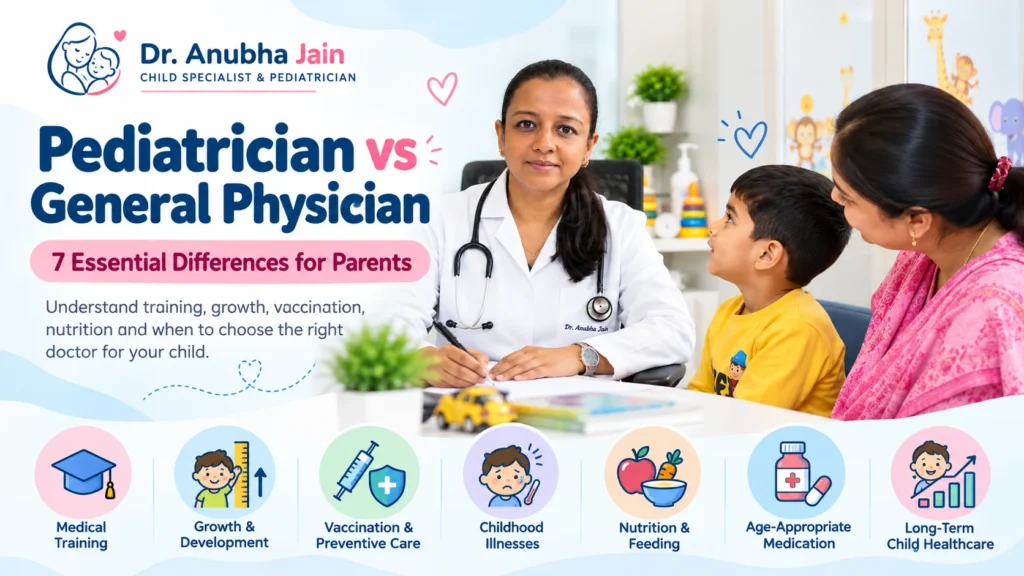
Understanding pediatrician vs general physician is important when parents are deciding who should provide medical care for their child. Children have different health needs from adults, particularly during infancy and early childhood. The right doctor depends on the child’s age, symptoms, medical history and healthcare needs.
A pediatrician has specialised training in child healthcare, whereas the scope of a general physician depends on their medical qualifications and experience. Both may have an important role in providing appropriate medical services.
This guide explains seven practical differences, when general medical care may be appropriate, when pediatric expertise is helpful and what parents should consider before arranging a consultation in Varanasi.
Quick Answer for Parents
For routine childhood concerns, an appropriately trained general practitioner may provide medical care. For newborn health, growth problems, developmental concerns or complex childhood illnesses, specialist pediatric evaluation may be particularly useful.
If your child has severe symptoms, seek urgent medical care instead of waiting for a routine appointment with a specific doctor.
What Is a Pediatrician?
A pediatrician is a medical doctor who has completed specialist training in the health and diseases of infants, children and adolescents. Pediatricians assess and manage a broad range of conditions affecting young patients.
Their work commonly includes childhood illness evaluation, growth monitoring, vaccination advice, nutrition guidance and developmental assessment. They also evaluate whether a child needs care from another specialist.
Parents looking for more information about local services can visit Pediatrician in Varanasi .
What Is a General Physician?
A general physician provides medical evaluation and treatment within the scope of their training. The term is used differently across healthcare settings. Some general practitioners provide care for patients of multiple ages, while physicians specialising in internal medicine may predominantly treat adults.
Some qualified general practitioners have experience managing common childhood conditions. However, specialised medical concerns may require pediatric assessment or referral. Parents can ask about the doctor’s experience with infants and children before arranging a non-urgent consultation.
Pediatrician vs General Physician: 7 Essential Differences
The following seven differences explain how different medical training and services can affect healthcare decisions for children. Neither type of doctor should be considered universally better in every clinical situation.
1. Specialist Training in Child Healthcare
Pediatricians undertake specialist medical education focused on children. Their training includes common childhood illnesses, serious pediatric conditions, neonatal health, growth and developmental concerns.
General practitioners may care for patients of different ages depending on their qualification and experience. A child’s specific condition helps determine whether specialist care is necessary.
2. Growth and Development Assessment
Growth assessment is more than checking a child’s height and weight during one visit. Doctors often consider previous measurements, growth charts, nutrition, family characteristics and overall health.
Pediatricians routinely evaluate childhood growth patterns and developmental progress. If a child is growing more slowly than expected, further evaluation may be recommended.
3. Vaccination and Preventive Care
Immunization is an important part of preventive child healthcare. Pediatricians commonly review vaccination records, explain recommended vaccines and discuss missed doses.
Qualified general practitioners may also provide immunization services. Parents should follow the vaccination recommendations appropriate to the child’s age, medical history and local healthcare guidelines.
4. Recognition of Childhood Illnesses
Fever, cough, vomiting, ear infections and other common problems can occur throughout childhood. Both appropriately trained general practitioners and pediatricians may evaluate such conditions.
Pediatricians have additional experience with age-specific presentations of illness. For example, the same symptom may require different evaluation in a newborn, toddler or older child.
Medical decisions should always consider the severity and duration of symptoms rather than the doctor’s specialty alone.
5. Nutrition and Feeding Guidance
Nutritional requirements change as a child grows. Parents may need advice about infant feeding, complementary foods, picky eating, weight gain or nutritional deficiencies.
A pediatrician can evaluate feeding concerns alongside growth measurements and the child’s medical history. Some children may also benefit from advice from a qualified pediatric dietitian.
6. Age-Appropriate Medication
Children are not simply smaller adults. Medication decisions depend on several factors, including the child’s diagnosis, age, weight and health conditions.
Doctors treating children should use appropriate pediatric prescribing guidelines. Parents should never independently reduce adult doses or use leftover prescription medicine for a child.
7. Continuity and Specialist Referrals
Regular consultations can help maintain an accurate record of vaccination, growth, previous illnesses and long-term concerns. Pediatricians often follow children through multiple developmental stages.
Some children require referral to a pediatric endocrinologist, neurologist, hematologist or another specialist. A pediatrician can help evaluate when additional expertise may be needed.
Family doctors with suitable training may also offer continuity of care and make specialist referrals.
When Should a Child Visit a Pediatrician?
A pediatric consultation may be useful when a child has a condition that needs detailed age-specific evaluation or ongoing monitoring. Parents do not need to wait for a severe illness before seeking medical advice.
Common Reasons for Pediatric Consultation
- Newborn feeding or weight concerns
- Repeated infections or persistent symptoms
- Slow growth or unexplained weight changes
- Delayed developmental milestones
- Vaccination questions and missed doses
- Ongoing feeding difficulties
- Early or delayed puberty-related concerns
- Unexplained fatigue or repeated illness
The need for specialist care depends on the individual child. A doctor may recommend testing or referral only when supported by the clinical assessment.
When Is a General Practitioner Appropriate?
A qualified general practitioner with appropriate experience treating children may be suitable for many routine medical concerns. The decision depends on the child’s age, the doctor’s competence and the nature of the illness.
When symptoms are prolonged, unusual or difficult to explain, additional pediatric evaluation may be useful. Parents should follow medical advice on when and where to seek further care.
When Does a Child Need Emergency Care?
Some medical symptoms require immediate assessment rather than a routine clinic appointment.
Important Warning Signs
- Severe breathing difficulty
- Blue or grey lips or skin
- Seizures or loss of consciousness
- Difficulty waking or reduced responsiveness
- Severe dehydration
- Uncontrolled bleeding
- Fever of 38°C or higher in an infant younger than three months
- Sudden or rapidly worsening serious symptoms
Seek urgent medical attention when these symptoms occur.
How Can Parents Choose the Right Child Doctor?
When choosing a healthcare professional, consider medical qualifications, experience with children, accessibility, communication and the services offered. A suitable doctor should explain medical concerns clearly and answer parents’ questions.
It can also help to understand the clinic’s consultation process, appointment availability and referral arrangements. These practical factors support consistent healthcare, particularly for families with infants or children requiring ongoing monitoring.
Parents searching for the Best Pediatrician Near Me can read the linked local guide for more information about finding suitable pediatric services.
Read our Best Pediatrician Near Me guide to explore practical considerations when selecting a doctor for your child.
Child Healthcare With Dr. Anubha Jain in Varanasi
Dr. Anubha Jain holds MBBS and MD (Pediatrics) qualifications and provides pediatric consultation in Kabir Nagar, Durgakund, Varanasi.
Parents may consult the clinic about childhood health concerns, growth assessment, vaccination, nutrition and other pediatric services according to their needs.
Clinic Information
Doctor: Dr. Anubha Jain
Qualifications: MBBS, MD (Pediatrics)
Address: Plot 36A, Kabir Nagar, Durgakund, Varanasi – 221005
Phone: +91 9454643742
Appointments: Contact the Clinic
Frequently Asked Questions
What is the difference between a pediatrician and a general physician?
A pediatrician specialises in children’s medical care. A general physician has a broader or different clinical scope depending on their qualifications and experience.
Can a general physician treat a child?
Yes. A general practitioner with appropriate training and experience may treat common childhood conditions and refer to a pediatrician when needed.
Should newborns be examined by a pediatrician?
Newborns benefit from age-specific medical assessment, including feeding, growth and jaundice evaluation. Pediatric expertise is particularly relevant during this period.
Which doctor is appropriate for slow height growth?
A pediatrician can review growth measurements and medical history, then determine whether further assessment or specialist referral is appropriate.
Can a pediatrician guide parents about vaccination?
Yes. Pediatricians commonly review vaccination records and discuss age-appropriate immunization.
Does every fever require a pediatric specialist?
Not always. The need for specialist care depends on the child’s age, symptoms and severity of illness. Fever in a baby under three months requires prompt medical assessment.
Where can families find pediatric consultation in Varanasi?
Dr. Anubha Jain provides pediatric consultation in Kabir Nagar, Durgakund, Varanasi.
Additional Respiratory Health Information for Parents
Children experiencing persistent cough, wheezing, asthma symptoms or recurring breathing problems may require medical evaluation.
For additional information about respiratory health, visit Samaria Multi-Speciality & Chest Centre, Varanasi .
Located in Kabir Nagar, Durgakund, Varanasi, the centre provides information about respiratory care and services including asthma management, pulmonary function testing, bronchoscopy, COPD care and other chest-related conditions.
The specialist team also includes Dr. Anubha Jain, Senior Consultant Pediatrician & Child Specialist.
Website: https://chestclinicvns.com/
Address: Plot 36A, Kabir Nagar, Durgakund, Varanasi – 221005.
Contact: +91 8795300333
Note: This resource provides information about respiratory healthcare. Children with severe breathing difficulty require immediate emergency medical attention.
Conclusion: Choosing Appropriate Medical Care
The most suitable healthcare provider depends on the child’s health needs and the doctor’s qualifications. Both pediatricians and appropriately trained general practitioners play valuable roles in medical care.
Pediatricians offer specialised knowledge of childhood growth, development, preventive healthcare and age-specific illnesses. Parents should seek timely medical evaluation whenever symptoms are concerning.
For families in Varanasi, the Best Pediatrician Near Me guide provides additional information about choosing accessible child healthcare.
Request Pediatric Consultation Call the ClinicMedical Disclaimer: This article is intended for general educational purposes. It does not replace individual medical advice, diagnosis or treatment. Seek emergency care for severe symptoms.