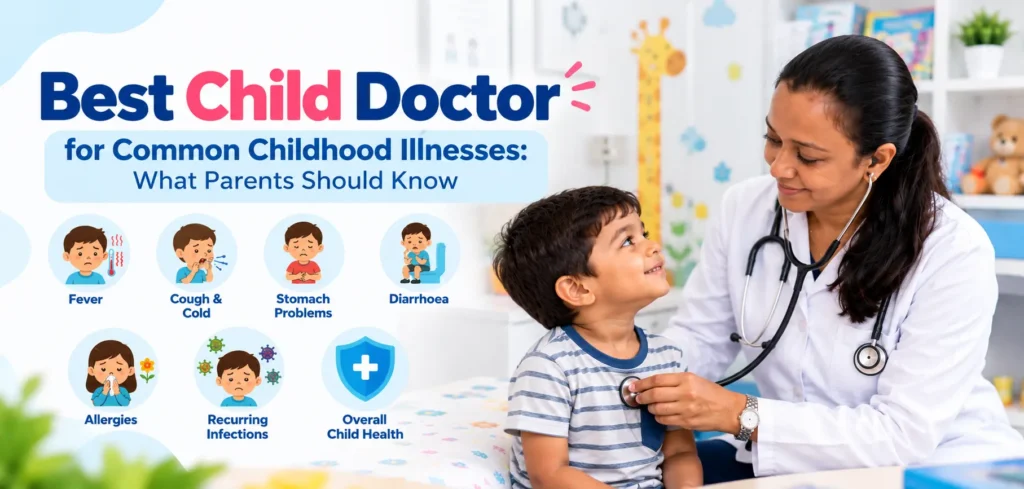
Finding the Best Child Doctor is an important decision for parents. Children can develop different health problems as they grow, from fever and cough to digestive problems, allergies and recurring infections.
A pediatrician is trained to understand the health needs of infants, children and adolescents. Knowing when your child needs medical evaluation can help parents respond to symptoms appropriately.
This guide explains common childhood illnesses, warning signs and situations in which parents should consider consulting a pediatrician.
When Should Parents Consider Pediatric Care?
- Persistent or high fever
- Ongoing cough or breathing problems
- Repeated infections
- Vomiting or diarrhoea
- Signs of dehydration
- Persistent allergies or skin reactions
- Concerns about eating or nutrition
- Growth or developmental concerns
- Unusual tiredness or weakness
- Symptoms that are persistent or getting worse
When Should You Take Your Child to the Best Child Doctor?
Children experience minor illnesses frequently, particularly during the early years. Many common symptoms may improve with appropriate home care, but some situations require evaluation by a qualified pediatrician.
Parents should consider medical advice when symptoms are persistent, severe, recurring or accompanied by other concerning changes in the child’s behaviour, eating, breathing or activity.
The Best Child Doctor for your child should be someone who can assess the child’s overall health and guide parents about appropriate treatment, monitoring and follow-up.
Common Childhood Illnesses That May Need Pediatric Care
Childhood illnesses can range from mild and temporary conditions to problems that need further evaluation. Some common concerns include respiratory infections, fever, stomach problems, allergies and recurring infections.
Parents should avoid relying only on online information when a child’s symptoms are persistent or concerning. A pediatric consultation can help determine the appropriate next step.
Fever in Children
Fever is common during childhood and can occur with many infections. The importance of fever depends on the child’s age, temperature, symptoms and overall condition.
Parents should seek medical advice if fever persists, keeps returning or occurs with symptoms that cause concern.
Cough and Cold in Children
Cough and cold symptoms are common in children. Most uncomplicated respiratory infections improve with time, but persistent cough, breathing difficulty or worsening symptoms should be evaluated by a pediatrician.
Children with recurring respiratory symptoms may also need assessment to understand whether allergies, asthma or another underlying problem could be contributing.
Stomach Problems and Vomiting
Children can experience stomach discomfort, vomiting or changes in appetite for many reasons. Mild symptoms may resolve, but repeated vomiting, severe abdominal pain or difficulty keeping fluids down should not be ignored.
A pediatrician can assess the symptoms and determine whether further evaluation is required.
Diarrhoea and Dehydration
Diarrhoea can lead to loss of fluids and electrolytes, which can be particularly concerning in young children.
Parents should pay attention to signs such as reduced urination, unusual sleepiness, dry mouth or difficulty drinking fluids and seek medical advice when appropriate.
Allergies in Children
Children can develop allergies that affect the skin, respiratory system or digestive system. Symptoms can vary depending on the trigger and the individual child.
Recurring rashes, itching, sneezing, breathing symptoms or reactions after particular foods should be discussed with a pediatrician.
Recurring Infections
Some children may experience infections more frequently than others, particularly when they are exposed to other children at school or daycare.
However, unusually frequent, severe or persistent infections may need evaluation to understand the underlying cause and determine appropriate care.
When Does a Child Need Urgent Medical Attention?
Certain symptoms can indicate that a child needs prompt medical attention. Parents should seek urgent medical care when a child has serious breathing difficulty, becomes unusually difficult to wake, has a seizure, develops severe dehydration or experiences another serious or rapidly worsening symptom.
Seek Prompt Medical Attention for Serious Symptoms
- Severe difficulty breathing
- Blue or grey lips or skin
- Severe dehydration
- Unusual difficulty waking or extreme drowsiness
- Seizure
- Severe or rapidly worsening pain
- Significant change in consciousness or behaviour
- Any symptom that appears immediately life-threatening
What Happens During a Pediatric Consultation?
During a pediatric consultation, the doctor may ask about the child’s symptoms, medical history, medications, eating habits, sleep and other relevant concerns.
Depending on the symptoms, the pediatrician may perform a physical examination and decide whether any additional tests or follow-up are required.
Parents should provide the doctor with accurate information about when the symptoms started, how they have changed and whether similar problems have occurred previously.
Why Choosing the Right Child Doctor Matters
Children may not always be able to clearly describe what they are feeling. A pediatrician needs to assess symptoms while also considering the child’s age, development and medical history.
Choosing a trusted pediatrician can make it easier for parents to discuss recurring health concerns, growth, nutrition, allergies and developmental questions.
Parents should consider qualifications, pediatric experience, communication, accessibility and continuity of care when choosing a doctor.
Child Health Concerns That Should Not Be Ignored
Not every symptom requires an immediate medical visit, but persistent changes in a child’s health should be discussed with a pediatrician.
- Repeated fever or infections
- Persistent cough
- Recurring stomach problems
- Poor appetite over a prolonged period
- Unexpected weight changes
- Slow growth or height concerns
- Recurring allergic reactions
- Persistent tiredness
- Changes in behaviour or development
Best Child Doctor: Questions Parents Can Ask
Before or during a pediatric consultation, parents may want to ask questions about their child’s symptoms, treatment and follow-up.
- What could be causing these symptoms?
- How long should the symptoms normally last?
- What warning signs should parents watch for?
- Does my child need any tests?
- When should we return for follow-up?
- Could recurring symptoms indicate another health problem?
- Are there changes in diet or daily routine that may help?
Frequently Asked Questions
How do I choose the Best Child Doctor for my child?
Parents can consider the doctor’s pediatric qualifications, experience, communication style, clinic accessibility and ability to provide appropriate ongoing care.
When should a child see a pediatrician?
A child should be evaluated when symptoms are persistent, severe, recurring or accompanied by concerning changes in breathing, behaviour, eating, hydration or activity.
Can a pediatrician treat common childhood illnesses?
Pediatricians evaluate and manage many common childhood health concerns and can determine when further testing or specialist evaluation may be appropriate.
Can a pediatrician help with allergies in children?
Yes. A pediatrician can evaluate recurring allergy-related symptoms and determine whether additional evaluation or specialist care is needed.
Can a pediatrician help with growth and nutrition concerns?
Yes. Pediatricians can monitor growth, assess nutrition and recommend further evaluation when a child’s height, weight or dietary intake raises concerns.
Related Health Resources
Parents can also explore additional healthcare information through the following relevant medical resource:
Conclusion
Finding the Best Child Doctor is about choosing a qualified pediatrician who understands children’s healthcare needs and can provide appropriate guidance for common illnesses, recurring symptoms, growth concerns and nutrition.
Parents should not ignore symptoms that are persistent, severe or getting worse. When in doubt, a pediatric consultation can help determine the appropriate next step.
For pediatric care in Varanasi, learn more about Best Child Doctor in Varanasi .