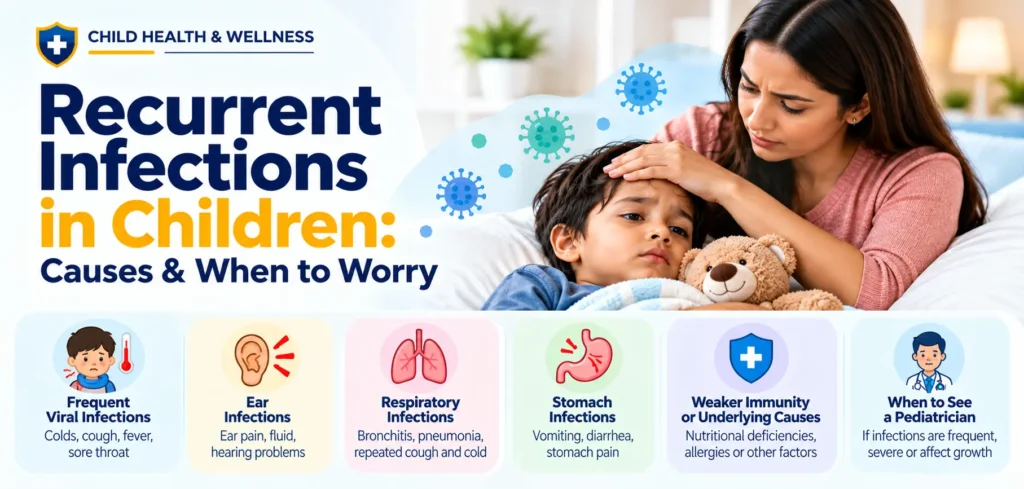
Recurrent Infections in Children: Causes & When to Worry
Recurrent infections in children are a common concern for parents, especially when a child seems to catch infections repeatedly during school or daycare years.
Children are regularly exposed to different viruses and bacteria, and several minor illnesses can occur during childhood. Getting sick from time to time does not automatically mean that a child has a weak immune system.
However, infections that are unusually frequent, severe, persistent or associated with poor growth may require pediatric evaluation.
Recurrent Infections in Children: Important Points for Parents
- Children can experience several minor infections, especially during school and daycare years.
- Frequent minor illnesses do not automatically mean that a child has weak immunity.
- The severity, duration and type of infections are important when assessing a child.
- Poor growth or weight gain along with recurrent infections may need further evaluation.
- A pediatrician can review the child’s complete medical and growth history.
Why Do Children Get Infections Frequently?
Children come into contact with many other children at school, daycare, playgrounds and social settings. This increases exposure to different infections.
Common childhood infections may include:
- Colds
- Cough and respiratory infections
- Sore throat
- Ear infections
- Stomach infections
- Viral fevers
Young children may experience infections more frequently as their immune system encounters different infectious organisms.
For general information about preventing infections and maintaining healthy habits in children, parents can refer to the CDC guidance on children’s health and infection prevention .
What Are Recurrent Infections?
There is no single number of infections that automatically means a child has an immune problem.
Doctors consider several factors, including:
- The child’s age
- Type of infection
- Severity of illness
- How often infections occur
- Whether the child recovers normally
- Whether infections require hospitalization
- Growth and weight
- Other health problems
The overall pattern is more important than simply counting how many times a child has been sick.
Common Reasons Children Get Sick Frequently
1. Exposure at School or Daycare
Children who attend school or daycare regularly interact with other children. Close contact makes it easier for respiratory and other infections to spread.
2. Normal Childhood Infections
Many children experience repeated minor viral infections, particularly during the early school years. A child having several uncomplicated infections does not necessarily indicate an immune deficiency.
3. Allergies
Allergies can sometimes cause symptoms that resemble repeated infections.
For example, a child with an allergy may have:
- Runny nose
- Sneezing
- Nasal congestion
- Cough
- Itchy eyes
If symptoms keep returning without a clear infection, an Allergy in Children evaluation may be appropriate.
4. Poor Nutrition
Adequate nutrition supports normal growth and overall health. Children with highly restricted diets or nutritional deficiencies may need nutritional assessment.
Parents can explore Pediatric Nutrition in Varanasi if they are concerned about their child’s diet or nutritional status.
5. Chronic Health Conditions
Certain underlying health conditions can increase the risk of repeated or prolonged infections. The child’s medical history and pattern of illness need to be considered before determining whether further investigation is necessary.
Does Frequent Illness Mean Weak Immunity?
Not necessarily. Many healthy children experience repeated minor infections, particularly when they are regularly exposed to other children.
A child who recovers normally between illnesses and continues to grow and develop appropriately may not have an underlying immune problem.
However, unusually severe, persistent or complicated infections should be discussed with a pediatrician.
Signs That May Need Medical Evaluation
Parents should consider consulting a pediatrician if their child has:
- Infections that are unusually severe
- Infections that take a long time to resolve
- Repeated infections requiring hospitalization
- Recurrent pneumonia or serious respiratory infections
- Persistent infections despite appropriate treatment
- Poor weight gain
- Slow growth
- Persistent diarrhea
- Significant nutritional concerns
- A history of unusual or difficult-to-treat infections
These signs do not automatically mean that a child has an immune disorder. A pediatrician can assess the complete medical history.
Can Poor Nutrition Increase Health Concerns?
Nutrition plays an important role in normal childhood development.
Children need adequate amounts of energy, protein, vitamins and minerals to support growth and general health.
A highly restricted diet, poor appetite or nutritional deficiency may require further assessment.
When Should Parents Worry About Recurrent Infections?
Parents should pay attention to the overall pattern rather than focusing on one illness.
Medical evaluation may be appropriate when:
- Infections are unusually severe
- Recovery takes longer than expected
- The child has repeated serious infections
- Growth or weight gain is affected
- The child has persistent diarrhea
- There are unusual infections
- The child frequently needs hospital care
- Parents have ongoing concerns about the child’s health
How Does a Pediatrician Evaluate Recurrent Infections?
A doctor may ask about:
- Number of infections
- Type of infections
- Duration of each illness
- Treatment received
- Hospital admissions
- Recovery between illnesses
- Vaccination history
- Nutrition
- Growth and development
- Family medical history
Depending on the child’s symptoms and history, additional investigations may or may not be needed.
Not every child with frequent colds requires immune-system testing.
Recurrent Infections and Child Growth
Growth is an important part of assessing a child’s overall health.
If a child has repeated significant illnesses along with poor weight gain or slow growth, the pediatrician may assess both the infections and the child’s growth pattern.
How Can Parents Reduce the Risk of Infections?
Parents can encourage healthy habits such as:
- Regular handwashing
- Age-appropriate vaccination
- Adequate sleep
- Balanced nutrition
- Regular physical activity
- Avoiding exposure to cigarette smoke
- Teaching children to cover coughs and sneezes
No strategy can prevent every childhood infection, but healthy routines can support overall child health.
When Should You Consult a Pediatrician?
If your child seems to be getting sick unusually often, has severe or prolonged infections, or is not growing or gaining weight as expected, consult a pediatrician.
A doctor can review the child’s complete history rather than assuming that frequent illness is caused by weak immunity.
For comprehensive child healthcare, parents can consult a Best Child Doctor in Varanasi for an individual assessment.
Frequently Asked Questions About Recurrent Infections in Children
Is it normal for children to get frequent infections?
Yes. Children can experience several minor infections, particularly when they attend school or daycare and are exposed to other children.
Does frequent illness mean my child’s immunity is weak?
Not necessarily. The severity, duration, type of infections and the child’s overall growth and health are more important than simply counting illnesses.
Can allergies look like repeated infections?
Yes. Allergy symptoms such as sneezing, runny nose and cough can sometimes resemble repeated respiratory infections.
Can poor nutrition affect a child’s health?
Inadequate nutrition can affect normal growth and overall health. Children with significant dietary restrictions or nutritional concerns may benefit from pediatric nutritional assessment.
When should I take my child to a pediatrician?
Consult a pediatrician if infections are unusually severe, persistent, recurrently complicated, affecting growth or requiring frequent hospital care.
Conclusion
Recurrent infections in children are often related to normal exposure to infections during childhood, particularly in school and daycare settings. Frequent minor illnesses alone do not necessarily indicate weak immunity.
However, unusually severe, prolonged or complicated infections, especially when accompanied by poor growth, poor weight gain or other health concerns, should be evaluated by a pediatrician.
If you are concerned about your child’s frequent illnesses, consult a Pediatrician in Varanasi for an appropriate evaluation.
Book a Pediatric Consultation for your child.