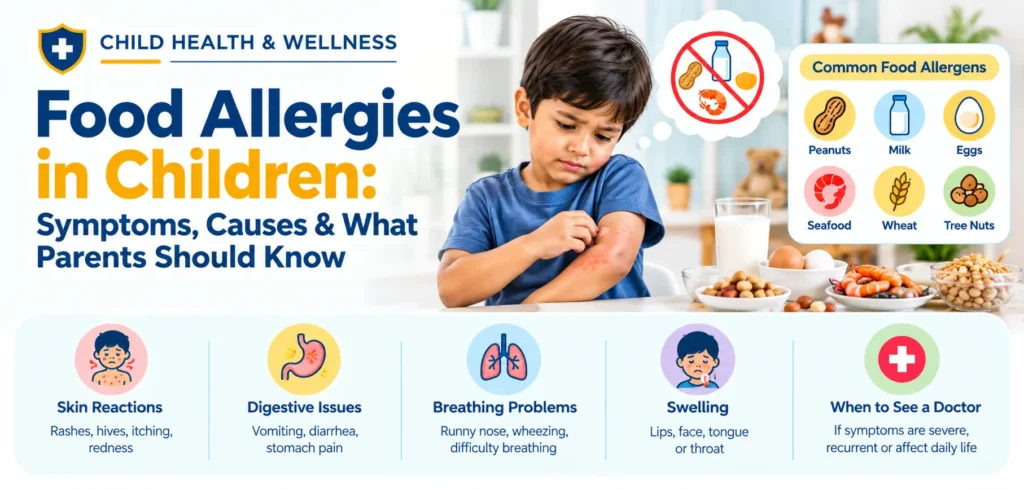
Food allergies in children occur when the immune system reacts abnormally to a particular food or ingredient. A reaction may involve the skin, digestive system or respiratory system and can range from mild to severe.
Food allergies can sometimes be confused with food intolerance, making it important for parents to understand the difference and recognize symptoms that may require medical attention.
Food Allergies in Children: Important Points for Parents
- Food allergies involve an immune response to a food protein.
- Symptoms can affect the skin, digestive system or respiratory system.
- Some allergic reactions can become serious or life-threatening.
- Food allergy and food intolerance are different conditions.
- Parents should seek medical guidance when a food allergy is suspected.
What Are Food Allergies in Children?
A food allergy occurs when the body’s immune system mistakenly identifies a food protein as harmful and produces an immune response.
Even a relatively small amount of a trigger food can cause a reaction in some children.
Common food allergens include:
- Milk
- Eggs
- Peanuts
- Tree nuts
- Wheat
- Soy
- Fish
- Shellfish
The foods responsible for an allergic reaction can vary from child to child.
Common Food Allergy Symptoms in Children
Food Allergy Symptoms in Children can develop shortly after eating a trigger food, although the timing and severity can vary.
Possible symptoms include:
- Skin rash
- Hives
- Itching
- Swelling of the lips, face or tongue
- Stomach pain
- Vomiting
- Diarrhea
- Coughing
- Wheezing
- Difficulty breathing
A child does not necessarily experience all of these symptoms during a reaction.
Common Foods That Can Cause Allergies
Some foods are more commonly associated with allergic reactions than others.
Milk
Cow’s milk allergy is one of the food allergies that can occur during childhood. Symptoms can involve the skin, digestive system or other parts of the body.
Eggs
Egg allergy can cause symptoms such as skin reactions, digestive symptoms or respiratory symptoms in some children.
Peanuts and Tree Nuts
Nut allergies can sometimes cause significant allergic reactions. Parents should take a known nut allergy seriously and follow the medical advice provided for their child.
Wheat
Some children may experience an allergic reaction to wheat. Wheat allergy is different from conditions such as celiac disease.
Fish and Shellfish
Fish and shellfish can cause allergic reactions in susceptible children and may persist into adulthood in some cases.
Food Allergy vs Food Intolerance
Food allergy and food intolerance are not the same condition.
A food allergy involves the immune system, whereas food intolerance generally does not involve the same immune response.
For example, some children may have difficulty digesting certain foods without having a true food allergy.
Because the symptoms can sometimes look similar, parents should avoid diagnosing the problem themselves.
What Causes Food Allergies in Children?
The exact reason why some children develop food allergies is not always known.
Several factors may influence the risk of Food Allergy in Children, including:
- Family history of allergic conditions
- Existing allergic diseases
- Individual immune response
- Environmental factors
- Other health-related factors
Having a family history of allergies does not mean that a child will definitely develop a food allergy.
When Can a Food Allergy Become an Emergency?
Some food allergies in children can cause severe reactions that require immediate medical attention.
Emergency warning signs may include:
- Difficulty breathing
- Swelling of the tongue or throat
- Severe wheezing
- Fainting or extreme weakness
- A combination of symptoms affecting different body systems
Important Emergency Warning
A severe allergic reaction can be life-threatening. If a child develops signs of a serious allergic reaction, seek emergency medical care immediately rather than waiting for symptoms to improve.
How Are Food Allergies Diagnosed?
A doctor may begin by asking about:
- What food the child consumed
- How much was consumed
- How quickly symptoms developed
- What symptoms occurred
- Whether the reaction has happened before
- Family history of allergies
Depending on the situation, a doctor may recommend appropriate allergy testing.
Parents should avoid completely eliminating multiple foods from a child’s diet without medical guidance because unnecessary food restrictions can affect nutrition and growth.
What Should Parents Do After a Food Allergy Reaction?
If a child has a suspected food reaction, parents should make a note of:
- The food eaten
- Ingredients in the food
- Time of eating
- Time symptoms started
- Symptoms observed
- Any treatment given
This information can help a doctor understand the reaction.
If a specific food allergy is confirmed, parents should follow the avoidance and emergency-management plan provided by their healthcare professional.
Can Children Outgrow Food Allergies?
Some children may outgrow certain food allergies, while others may continue to have them for many years.
Whether a child is likely to outgrow an allergy depends on factors such as the specific food, the type of allergy and the child’s individual medical history.
Parents should not deliberately reintroduce a food that has caused a significant allergic reaction without appropriate medical guidance.
Food Allergies and Child Nutrition
Avoiding a food can sometimes make it harder for a child to receive certain nutrients, particularly when several foods need to be avoided.
For example, children avoiding dairy or other major food groups may require careful nutritional planning.
A Pediatric Nutrition in Varanasi consultation can help parents understand how to maintain a balanced diet when food restrictions are necessary.
When Should Parents Consult a Pediatrician?
Parents should consult a pediatrician if their child repeatedly develops symptoms after eating a particular food.
Medical evaluation is particularly important when the child experiences:
- Repeated hives after eating
- Swelling of the lips or face
- Vomiting associated with a particular food
- Coughing or wheezing after eating
- Difficulty breathing
- Multiple symptoms occurring together
- A suspected severe allergic reaction
A Pediatrician in Varanasi can evaluate the child’s symptoms and determine whether further allergy assessment is appropriate.
Food Allergies in Children and Overall Child Health
Managing Food Allergies in Children involves more than avoiding a suspected trigger. Parents also need to consider nutrition, growth, school or daycare safety and the child’s overall health.
If dietary restrictions are affecting eating habits or growth, a pediatric assessment and appropriate nutritional guidance may be helpful.
Frequently Asked Questions About Food Allergies in Children
What are the most common food allergy symptoms in children?
Common symptoms include hives, itching, swelling, vomiting, stomach discomfort, coughing and wheezing. Severe reactions can involve difficulty breathing or other emergency symptoms.
Can food allergies cause stomach problems?
Yes. Food allergies can sometimes cause digestive symptoms such as vomiting, abdominal discomfort or diarrhea.
Is food intolerance the same as a food allergy?
No. Food allergy involves an immune response, while food intolerance generally does not involve the same immune mechanism.
Should parents stop giving a food after a suspected allergic reaction?
Parents should discuss suspected reactions with a healthcare professional. If the child has had a severe reaction, immediate medical attention is necessary.
Can children outgrow food allergies?
Some children may outgrow certain food allergies, while others may continue to have them. Individual medical assessment is important.
Should I get allergy testing for my child?
Testing may be appropriate when the child’s history suggests a possible food allergy. A doctor can determine whether testing is necessary based on the symptoms and medical history.
Conclusion
Food allergies in children can cause a range of symptoms, from mild skin reactions to potentially serious allergic reactions. Recognizing symptoms and identifying possible food triggers can help parents seek appropriate medical care.
Parents should avoid unnecessary food restrictions and should not attempt to test a suspected allergen at home, particularly when the child has previously experienced a significant reaction.
If your child develops repeated symptoms after eating certain foods, consult a Pediatrician in Varanasi for proper evaluation and guidance.
For children with food allergies or dietary restrictions, appropriate pediatric and nutritional guidance can help support healthy growth and development.