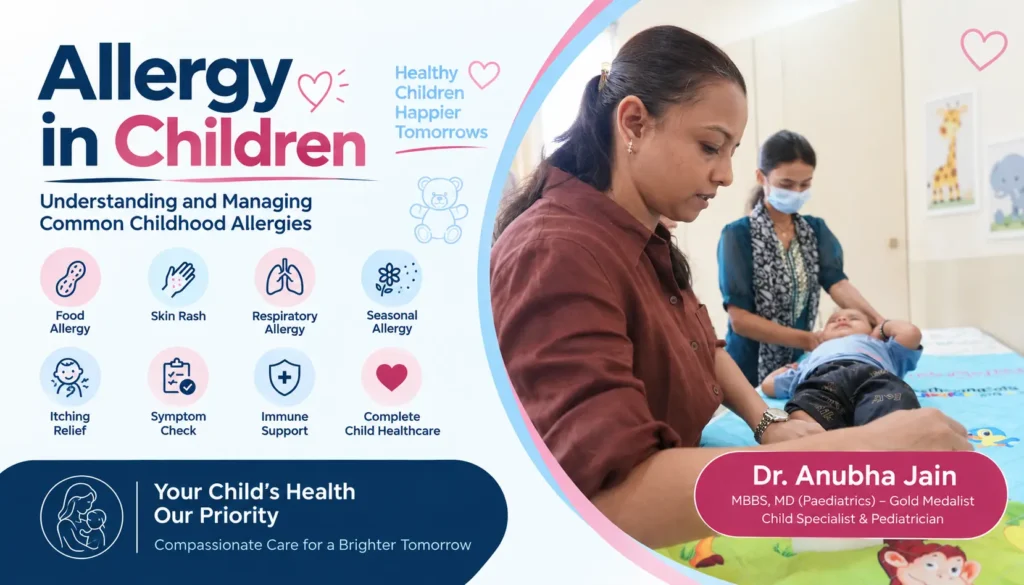
Understanding and Managing Common Childhood Allergies
Helping Parents Understand Allergies in Children
Allergies can affect children in different ways. A child may develop symptoms after exposure to certain foods, environmental allergens, medicines or other triggers.
Symptoms can range from mild skin reactions to respiratory or digestive complaints. Identifying the possible trigger and understanding the child’s symptoms can help guide appropriate medical care.
Dr. Anubha Jain provides pediatric consultation in Varanasi for children experiencing allergy-related symptoms and concerns.
What Is an Allergy in Children?
An allergy occurs when the immune system reacts to a substance that is usually harmless to most people.
Children Can Develop Allergies To:
- Certain foods
- Dust
- Pollen
- Pet-related allergens
- Insect exposure
- Medicines
- Other environmental triggers
The symptoms and severity can vary from child to child.
Common Types of Allergies in Children
Food Allergies
Some children may develop allergic reactions after consuming particular foods.
Possible symptoms can include:
- Skin rash
- Hives
- Swelling
- Vomiting
- Abdominal discomfort
- Breathing difficulty
If a child develops a serious or rapidly worsening reaction, urgent medical attention is required.
Skin Allergies
Children may develop skin symptoms such as:
- Itching
- Redness
- Rash
- Hives
- Swelling
A pediatric assessment can help determine whether the symptoms may be related to an allergy or another skin condition.
Respiratory Allergies
Environmental triggers can sometimes contribute to respiratory symptoms.
- Sneezing
- Runny nose
- Nasal congestion
- Cough
- Wheezing
- Breathing discomfort
Persistent respiratory symptoms should be evaluated by a doctor.
Seasonal Allergies
Some children experience symptoms during particular seasons.
- Sneezing
- Runny nose
- Itchy eyes
- Nasal congestion
- Cough
Identifying when symptoms occur can help the doctor understand possible triggers.
Common Allergy Symptoms in Children
Skin Symptoms
- Rash
- Itching
- Hives
- Redness
- Swelling
Nose and Eye Symptoms
- Sneezing
- Runny nose
- Blocked nose
- Itchy eyes
- Watery eyes
Digestive Symptoms
- Vomiting
- Abdominal discomfort
- Diarrhea
Respiratory Symptoms
- Cough
- Wheezing
- Breathing difficulty
What Causes Allergies in Children?
Common triggers may include:
- Food allergens
- Dust
- Pollen
- Animal dander
- Insect exposure
- Certain medicines
- Environmental irritants
However, not every rash, cough or stomach problem is caused by an allergy.
A proper clinical evaluation is important before identifying a particular trigger.
How Are Childhood Allergies Evaluated?
Medical History
The doctor may ask:
- When did symptoms begin?
- What was the child exposed to?
- How frequently do symptoms occur?
- Is there a family history of allergies?
- Are symptoms associated with a particular food or environment?
Symptom Assessment
The pattern, duration and severity of symptoms are considered.
Physical Examination
The child may be examined for relevant signs.
Further Evaluation
If clinically appropriate, the doctor may recommend additional tests or specialist evaluation.
When Should Parents See a Doctor for Childhood Allergy?
Parents should consider a pediatric consultation when:
- Allergy-like symptoms keep returning
- The trigger is unclear
- Skin rashes are persistent
- Food seems to cause repeated symptoms
- The child has recurrent sneezing or nasal symptoms
- Wheezing or breathing symptoms occur
- Allergic symptoms interfere with school, sleep or daily activities
Allergy in Children and Food
Food-related symptoms can sometimes be confused with food intolerance or other digestive conditions.
Parents should avoid unnecessarily eliminating large numbers of foods from a child’s diet without appropriate medical advice.
A doctor can help assess:
- The suspected food
- Timing of symptoms
- Type of reaction
- Severity
- Child’s nutritional requirements
This is particularly important because restrictive diets can affect children’s nutrition and growth.
Allergy and Child Growth
Persistent health or dietary problems can sometimes affect a child’s nutrition and overall wellbeing.
If your child has allergies along with:
- Poor appetite
- Restricted diet
- Poor weight gain
- Growth concerns
A broader pediatric evaluation may be appropriate.
Managing Allergies in Children
Management depends on the type and severity of the allergy.
- Identifying possible triggers
- Avoiding confirmed allergens
- Managing symptoms as advised by a doctor
- Following an appropriate treatment plan
- Monitoring recurring symptoms
- Maintaining adequate nutrition
Parents should not start long-term medicines or restrictive diets without medical advice.
When Is Allergy an Emergency?
Some allergic reactions can become serious.
Emergency Care
Seek urgent medical care if a child develops:
- Difficulty breathing
- Severe wheezing
- Swelling of the tongue or throat
- Fainting or unusual weakness
- A rapidly worsening reaction involving multiple body systems
Why Choose Dr. Anubha Jain for Allergy Concerns in Varanasi?
Child-Focused Evaluation
Allergy-like symptoms are evaluated in the context of the child’s age, medical history and overall health.
Understanding the Trigger
Parents can discuss recurring symptoms and possible triggers during consultation.
Nutrition-Aware Care
Dietary concerns can be considered alongside the child’s nutritional and growth requirements.
Complete Pediatric Healthcare
Allergy concerns can be evaluated as part of the child’s overall pediatric healthcare.
Frequently Asked Questions
Q1. What are common allergies in children?
Children may develop food, skin, respiratory or seasonal allergies depending on their individual sensitivity and exposure.
Q2. What are the symptoms of allergy in children?
Symptoms may include rashes, itching, sneezing, runny nose, watery eyes, vomiting, swelling, coughing or wheezing.
Q3. How can I know what is causing my child’s allergy?
A doctor can review the child’s symptoms, exposure history and medical history and determine whether further evaluation or testing is appropriate.
Q4. Can food allergies affect a child’s growth?
Severe or persistent food-related problems may affect nutrition if they significantly restrict the child’s diet. Appropriate medical and nutritional guidance can help.
Q5. Should I stop giving my child a particular food if I suspect an allergy?
Parents should discuss recurring or concerning reactions with a doctor before making major long-term dietary restrictions, particularly in growing children.
Q6. When is an allergy an emergency?
Difficulty breathing, severe swelling of the tongue or throat, fainting or a rapidly worsening reaction can require emergency medical attention.
Q7. Can children outgrow allergies?
Some childhood allergies may change over time, while others can persist. The course depends on the specific allergy and the individual child.
Concerned About Allergy Symptoms in Your Child?
Get your child’s symptoms evaluated and understand the possible triggers with pediatric care in Varanasi.
Book an Appointment with Dr. Anubha Jain