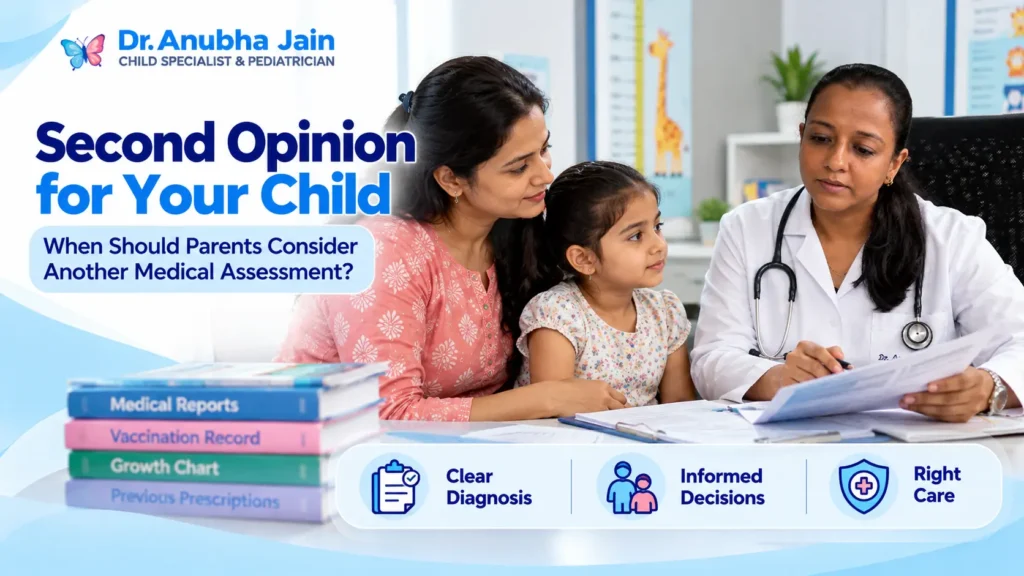
Seeking a second opinion for child healthcare is a reasonable step when parents want to understand a diagnosis, treatment recommendation or ongoing medical concern more clearly. It does not necessarily mean that the first doctor made a mistake.
Some childhood health problems are straightforward, while others require careful assessment, follow-up or specialist involvement. Parents may have questions when symptoms continue, test results are difficult to understand or more than one treatment option exists.
This guide explains when an additional pediatric consultation may be helpful, how to organise medical records, which questions to ask and how to make informed decisions without unnecessarily delaying treatment.
Quick Answer for Parents
A pediatric second opinion is an additional medical assessment by another qualified healthcare professional. It may help clarify a diagnosis, review treatment alternatives or identify whether specialist care is needed.
For stable, non-emergency concerns, parents can arrange another consultation. For severe breathing difficulty, loss of consciousness or other emergency symptoms, seek immediate medical attention instead of waiting for a second opinion.
What Does a Second Opinion for Child Healthcare Mean?
A second opinion involves asking another qualified doctor to independently review a child’s medical concern. The clinician may review previous records, ask further questions and perform a new examination.
Depending on the situation, the second doctor may agree with the original diagnosis, recommend additional evaluation or discuss another reasonable treatment approach.
The purpose is to improve understanding and decision-making, not automatically replace the original treating doctor.
When Should Parents Consider a Pediatric Second Opinion?
A second assessment can be useful when important questions remain unanswered or the child’s condition is not progressing as expected.
When Symptoms Continue Despite Treatment
Some illnesses take time to improve, and follow-up with the original doctor is often the appropriate first step.
If symptoms continue beyond the expected recovery period or the medical explanation remains unclear, another qualified assessment may help determine the next steps.
When a Diagnosis Is Uncertain
Children may have overlapping symptoms from different medical conditions. For example, persistent abdominal pain, unexplained growth changes or recurrent headaches can have several causes.
An additional opinion may help review whether the diagnostic approach is appropriate.
When a Major Treatment Is Recommended
Parents may wish to understand the benefits, risks and alternatives before a significant procedure or long-term treatment.
The need and timing for a second opinion depend on how urgent the treatment is. A time-sensitive intervention should not be delayed without discussing the risks with the treating team.
When a Child Has a Complex or Chronic Condition
Children with ongoing medical conditions may need care from several professionals.
Another assessment can sometimes help coordinate treatment, clarify follow-up requirements or determine whether a pediatric subspecialist should be involved.
When Parents Need a Clearer Explanation
Medical terminology and test reports can be difficult to understand.
Parents should first feel comfortable asking their current doctor to explain the findings and options. If substantial uncertainty remains, another consultation may offer additional clarity.
Is Seeking Another Opinion Disrespectful to the First Doctor?
No. Seeking more information is a legitimate part of participating in a child’s healthcare decisions.
A second opinion does not automatically indicate a problem with the first doctor’s treatment. Different clinicians may agree with one another or consider additional possibilities.
Parents can communicate respectfully and share complete medical records with both clinicians. This helps avoid unnecessary repetition of testing and confusion about medication plans.
When Should Parents Return to the Same Pediatrician First?
Many concerns can be resolved through a follow-up appointment with the doctor already treating the child.
That doctor may have access to previous examination findings, growth records and test results that help explain the recommended approach.
Questions to Ask Before Booking Another Consultation
- What is the working diagnosis?
- What findings support this diagnosis?
- When should improvement be expected?
- Which symptoms would change the treatment plan?
- Are additional tests actually necessary?
- Are there alternative treatment options?
- Would specialist referral be appropriate?
If symptoms are worsening, ask for timely reassessment rather than assuming a routine follow-up is sufficient.
When Is a Second Opinion Helpful for Growth and Development?
Growth concerns are a common reason parents seek clarification. A child may appear shorter than classmates or have a different weight pattern from siblings.
The medical assessment should consider measurements over time, family characteristics, nutrition and other clinical findings.
A second pediatric assessment may be helpful when growth records show a concerning change, the cause remains uncertain or a significant treatment decision is being considered.
Can Parents Seek a Second Opinion About Vaccinations?
Parents sometimes have questions about vaccine schedules, missed doses or recommendations for children with particular medical conditions.
A qualified pediatrician can review the vaccination record, explain recommended immunisations and discuss any medically relevant precautions.
A second opinion should be based on reliable medical evidence. Unnecessary delays in recommended vaccination may leave children unprotected.
What Documents Should Parents Bring for a Pediatric Second Opinion?
Providing complete records helps the new clinician understand what has already been investigated and treated.
Medical Records Checklist
- Previous prescriptions and consultation notes
- Laboratory test reports
- Imaging reports and images, when available
- Hospital discharge summaries
- Child’s vaccination card
- Growth chart and earlier height or weight records
- Current medication names and doses
- Known medication or food allergies
- A timeline of symptoms and treatment response
- Questions the family wants answered
Original reports are preferable when available. Parents should not alter or omit information because they feel it may influence the new doctor’s assessment.
What Happens During a Pediatric Second Opinion Appointment?
The clinician generally begins by listening to the parent’s concerns and reviewing the child’s health history.
An examination may be performed, depending on the condition. The doctor then considers previous test results and explains the clinical findings.
In some situations, no further testing is necessary. In others, a specific test or specialist evaluation may be recommended.
An independent opinion does not always produce a different diagnosis. Agreement between clinicians may reassure families that the existing plan is reasonable.
What If Two Doctors Give Different Recommendations?
Different recommendations can occur because clinicians have different interpretations of available information, or because more than one appropriate option exists.
Parents should ask each doctor to explain the benefits, risks and evidence behind the recommended approach.
If the disagreement involves a major diagnosis or significant treatment, a relevant specialist or multidisciplinary team may help clarify the best approach.
Do not combine medicines from two different prescriptions or abruptly stop essential treatment without obtaining clear medical instructions.
How Can Parents Choose a Doctor for a Second Opinion?
The choice should depend on the child’s problem and the qualifications of the professional offering the assessment.
What to Look For
- Appropriate medical qualifications and registration
- Relevant experience with the child’s age group
- Expertise relevant to the specific health concern
- Willingness to review previous medical records
- Clear explanations of diagnosis and treatment options
- Appropriate referral to a subspecialist when needed
- Accessible follow-up and coordinated care
For general childhood illnesses and preventive healthcare, a qualified pediatrician may be an appropriate starting point.
For some complex conditions, a pediatric subspecialist may provide more relevant expertise than an additional general consultation.
When Should Parents Not Wait for a Second Opinion?
Seeking another opinion must not delay urgent care for a seriously unwell child.
Seek Immediate Emergency Care If a Child Has:
- Severe difficulty breathing
- Blue or grey lips or skin
- Unresponsiveness or difficulty waking
- Seizures or sudden neurological changes
- Severe dehydration
- Uncontrolled bleeding or major injury
- Severe and rapidly worsening abdominal pain
- A temperature of 38°C or higher in an infant younger than three months
Emergency symptoms should be evaluated promptly at an appropriate medical facility. Do not delay treatment while arranging another routine clinic appointment.
Finding Pediatric Consultation in Varanasi
Families seeking another qualified medical assessment can compare professional credentials, clinic accessibility and the experience relevant to their child’s concern.
For information about general pediatric care, visit the Pediatrician in Varanasi service page.
Parents who are comparing local consultation options may also read the Best Pediatrician Near Me guide for considerations when choosing a nearby child healthcare provider.
Dr. Anubha Jain – Pediatric Consultation in Varanasi
Dr. Anubha Jain holds MBBS and MD (Pediatrics) qualifications and provides pediatric consultation in Kabir Nagar, Durgakund, Varanasi.
Families can enquire about pediatric assessment for childhood illnesses, growth, nutrition and other general health concerns. The suitability of a second-opinion consultation or specialist referral depends on the child’s individual medical needs.
Clinic Information
Doctor: Dr. Anubha Jain
Qualifications: MBBS, MD (Pediatrics)
Address: Plot 36A, Kabir Nagar, Durgakund, Varanasi – 221005
Phone: +91 9454643742
Appointments: Contact Dr. Anubha Jain
Frequently Asked Questions About Pediatric Second Opinions
Is it okay to get a second opinion for my child?
Yes. Parents may seek another qualified medical opinion when they need clarity about diagnosis, treatment or important healthcare decisions.
When should I seek a pediatric second opinion?
It may be useful when symptoms persist, a diagnosis is unclear, a major treatment is proposed or parents have unanswered questions.
Should I tell the new doctor about previous treatment?
Yes. Share prescriptions, reports, medical history and treatment response so the new clinician can assess the situation accurately.
Will a second opinion always change the diagnosis?
No. The second doctor may agree with the original assessment or recommend additional evaluation.
Can I request a second opinion before surgery?
For a non-emergency procedure, an additional opinion may help explain the benefits, risks and alternatives. Urgent surgery should not be delayed without medical advice.
Can a pediatrician provide a second opinion about growth?
A pediatrician may review growth charts, feeding history and clinical findings, then recommend specialist assessment when appropriate.
What should parents do if doctors disagree?
Ask for a clear explanation of the recommendations and evidence. Specialist review may help with complex decisions.
Which doctor should I consult for my child in Varanasi?
Choose a qualified medical professional whose training matches your child’s health needs. A pediatrician can provide general child health assessment and referral when needed.
Additional Respiratory Health Information for Parents
Children experiencing persistent cough, wheezing, asthma symptoms or recurring breathing problems may require medical evaluation.
For additional information about respiratory health, visit Samaria Multi-Speciality & Chest Centre, Varanasi .
Located in Kabir Nagar, Durgakund, Varanasi, the centre provides information about respiratory care and services including asthma management, pulmonary function testing, bronchoscopy, COPD care and other chest-related conditions.
The specialist team also includes Dr. Anubha Jain, Senior Consultant Pediatrician & Child Specialist.
Website: https://chestclinicvns.com/
Address: Plot 36A, Kabir Nagar, Durgakund, Varanasi – 221005.
Contact: +91 8795300333
Note: This resource provides information about respiratory healthcare. Children with severe breathing difficulty require immediate emergency medical attention.
Conclusion: Making Informed Healthcare Decisions
A second opinion can help families understand complex medical recommendations, clarify uncertain diagnoses and discuss reasonable treatment alternatives. It does not necessarily mean the initial assessment was incorrect.
Parents should bring complete medical records, ask clear questions and consider the qualifications of the healthcare professional. Emergency care must never be postponed while seeking another routine opinion.
To learn more about local pediatric consultations, visit Pediatrician in Varanasi or explore the Best Pediatrician Near Me guide.
Request Pediatric Consultation Call the ClinicMedical Disclaimer: This article provides general educational information and does not replace individual medical assessment, diagnosis or treatment. Follow urgent medical recommendations when delay could place a child at risk.