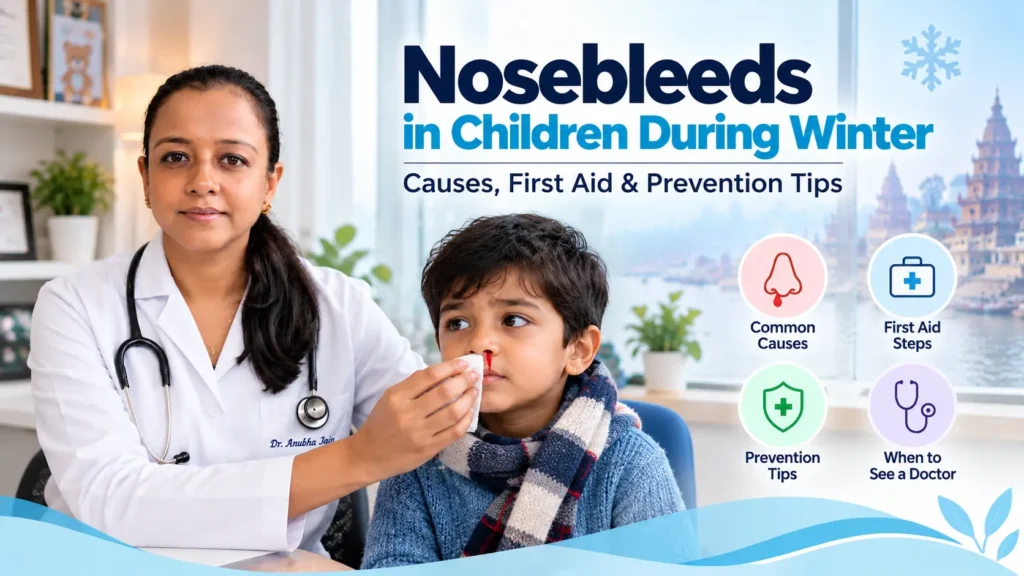
Nosebleeds in Children During Winter: Causes, First Aid & Prevention Tips
As November brings cooler weather and changing humidity levels to Varanasi, parents may notice new seasonal concerns, including dry skin, nasal irritation and occasional nosebleeds.
Nosebleeds in children during winter can occur when the delicate lining inside the nose becomes dry and irritated. Nose rubbing, picking, colds and allergies may also contribute to bleeding.
Seeing blood from a child’s nose can be frightening. However, many childhood nosebleeds are minor and can be managed with appropriate first aid.
This guide explains why winter nosebleeds happen, how parents can respond safely, practical prevention measures and when medical evaluation is necessary.
Quick Answer: Why Do Children Get Nosebleeds in Winter?
Winter nosebleeds in children often occur because dry air irritates the nasal lining, making small blood vessels more likely to bleed. Frequent nose rubbing, picking, forceful blowing and seasonal illnesses can increase the risk.
To stop a nosebleed, have your child sit upright, lean slightly forward and pinch the soft part of the nose continuously for 10 minutes. If bleeding continues, repeat pressure and seek medical guidance promptly.
Seek urgent care for heavy bleeding, breathing difficulty, significant injury or bleeding that does not stop with appropriate first aid.
What Causes Nosebleeds in Children During Winter?
The nose contains many small blood vessels close to its inner surface. These vessels may bleed when the delicate nasal lining becomes irritated or damaged.
Common causes include:
1. Dry Winter Air
Cold outdoor conditions and dry indoor air can reduce moisture inside the nose. Dry nasal tissue may crack and bleed more easily.
2. Nose Picking
Picking the nose can damage small blood vessels, especially when the nasal lining is already dry or irritated.
3. Forceful Nose Blowing
Repeated or forceful blowing during colds can disturb sensitive nasal tissue and trigger bleeding.
4. Nasal Allergies
Allergies may cause itching, sneezing and frequent rubbing of the nose, increasing irritation.
5. Common Cold
Nasal congestion, inflammation and repeated wiping or blowing during an infection can contribute to nosebleeds.
6. Minor Injury
Accidental bumps, scratching or a foreign object in the nose can cause bleeding and may require assessment.
Less commonly, recurrent nosebleeds may be associated with a bleeding disorder or another medical condition. Persistent or unusual bleeding should not automatically be attributed to winter weather.
How to Stop a Nosebleed in a Child: Step-by-Step First Aid
Knowing the correct first-aid technique can help parents respond calmly and safely.
Step 1: Help Your Child Stay Calm
Reassure your child and encourage slow, comfortable breathing. Explain that you will help stop the bleeding.
Step 2: Sit Upright and Lean Forward
Ask your child to sit upright with the head tilted slightly forward.
Do not tilt the head backward. Blood may run into the throat and cause nausea, coughing or vomiting.
Step 3: Pinch the Soft Part of the Nose
Using your thumb and finger, firmly pinch the soft lower part of the nose, just below the hard nasal bridge.
Encourage your child to breathe through the mouth.
Step 4: Maintain Pressure for 10 Minutes
Keep continuous pressure for a full 10 minutes without releasing it to check whether bleeding has stopped.
Releasing pressure too early can disturb the forming clot and restart bleeding.
Step 5: Check and Repeat if Necessary
If bleeding continues after the first 10 minutes, apply continuous pressure again while arranging medical advice.
If the nosebleed continues after a further 10 minutes, seek urgent medical assessment. Do not wait if the bleeding is heavy or the child appears unwell.
Step 6: Allow the Nose to Recover
Once bleeding stops, encourage quiet activities. Avoid nose picking, forceful blowing and strenuous exercise for the next 24 hours.
Common Nosebleed First Aid Mistakes Parents Should Avoid
Several traditional responses can make nosebleed management less effective.
What Not to Do
- Do not tilt the child’s head backward.
- Do not ask the child to lie flat during bleeding.
- Do not repeatedly release pressure to inspect the nose.
- Do not place deep cotton or tissue plugs inside the nose.
- Do not encourage forceful nose blowing immediately afterward.
- Do not use medication or medicated nasal drops without appropriate guidance.
Consistent pressure on the soft part of the nose is generally the most important immediate step for an uncomplicated nosebleed.
How to Prevent Nosebleeds in Children During Winter
Parents may be able to reduce recurrent winter nosebleeds by addressing dryness and unnecessary nasal irritation.
Maintain Comfortable Humidity
If indoor air is excessively dry, an appropriately maintained humidifier may help. Clean the equipment regularly to prevent contamination.
Discourage Nose Picking
Encourage children to avoid picking or scratching inside the nose. Keeping fingernails trimmed may reduce accidental injury.
Encourage Gentle Nose Blowing
Teach children to blow their nose gently rather than forcefully, especially during a cold.
Discuss Saline Products
An age-appropriate saline nasal spray or drops may help some children with nasal dryness. Ask a clinician about suitable use for your child’s age.
Manage Nasal Allergies
Frequent sneezing or itching may increase nose rubbing. A pediatrician can evaluate recurrent symptoms and recommend appropriate care.
Avoid Smoke Exposure
Reduce exposure to tobacco smoke and other irritating airborne pollutants that may worsen nasal discomfort.
For recurrent nosebleeds, a pediatrician may suggest additional measures to moisturize the nasal lining. Do not apply oils, ointments or medicated products inside a young child’s nose without appropriate advice.
Are Nosebleeds Normal in Toddlers and Young Children?
Nosebleeds can occur throughout childhood, but age matters when deciding whether additional medical assessment is needed.
Nosebleeds in Toddlers
Young children may rub or pick their noses and may not be able to explain what happened before bleeding started.
Nosebleeds in children under two years should be assessed by a healthcare professional rather than assumed to be caused by dry air.
Nosebleeds in School-Age Children
School-age children may experience bleeding after nasal irritation, allergies or minor injuries.
An occasional minor episode may resolve with appropriate first aid. Repeated episodes or unusual accompanying symptoms require medical advice.
Nosebleeds in Adolescents
Older children and teenagers can also develop nosebleeds because of dryness, allergies, injury or other conditions.
Persistent or frequent bleeding should be assessed regardless of age.
Frequent Nosebleeds in Children: When Should Parents Be Concerned?
Occasional bleeding associated with nasal dryness may not indicate serious illness. However, frequent or difficult-to-stop nosebleeds deserve further assessment.
Parents should arrange medical advice when:
- Nosebleeds occur repeatedly over several days or weeks.
- Bleeding is difficult to control.
- The child bruises unusually easily.
- Bleeding also occurs from the gums or minor injuries.
- The child has a known bleeding disorder.
- There is a family history of abnormal bleeding.
- The child appears unusually pale, tired or weak.
A pediatrician may examine the nose and review the child’s medical history. Depending on the findings, investigations or a specialist referral may be appropriate.
Parents can explore more information about blood disorders in children when discussing persistent or unexplained bleeding concerns.
When Does a Child’s Nosebleed Need Urgent Medical Care?
Seek urgent or emergency medical care when:
- Bleeding is heavy or continues despite appropriate direct pressure.
- The child has difficulty breathing.
- The child becomes dizzy, faint or unusually weak.
- Bleeding follows a significant injury to the head or face.
- The child is swallowing large amounts of blood or vomiting repeatedly.
- The child has a known bleeding disorder and bleeding is difficult to control.
Do not delay emergency care for severe symptoms or uncontrolled bleeding.
How Does a Pediatrician Evaluate Recurrent Nosebleeds?
Repeated nosebleeds can have different causes. A pediatrician may begin by reviewing the child’s history and examining the nose.
Symptom History
Review how often bleeding occurs, how long it lasts, whether it follows injury and whether other bleeding symptoms are present.
Nasal Examination
Check for dryness, irritation, injury or other visible causes when appropriate.
Medical and Family History
Ask about allergies, medicines, previous medical problems and a family history of unusual bleeding.
Further Evaluation
Recommend investigations or ENT referral when recurrent, severe or unexplained bleeding requires additional assessment.
Treatment depends on the underlying cause. Not every child with a nosebleed needs laboratory testing or a specialist procedure.
For general childhood health concerns, learn about pediatrician services in Varanasi .
Winter Nosebleed Prevention Checklist for Parents
Simple Daily Precautions
- Encourage gentle nose blowing.
- Discourage nose picking and frequent rubbing.
- Keep fingernails trimmed.
- Check whether indoor air is unusually dry.
- Clean humidifiers according to manufacturer guidance.
- Avoid tobacco smoke and unnecessary irritants.
- Discuss recurrent allergy symptoms with a clinician.
- Keep track of repeated or difficult-to-stop episodes.
These steps may help reduce irritation, but prevention depends on the cause of the child’s bleeding.
Nosebleeds in Children During Winter: Pediatric Care in Varanasi
As temperatures and humidity change during November and winter in Varanasi, parents may notice their children developing nasal dryness, recurring colds or occasional nosebleeds.
While many minor nosebleeds can be managed with appropriate first aid, recurrent bleeding, unusual bruising or persistent symptoms deserve medical evaluation.
Dr. Anubha Jain provides pediatric consultations in Kabir Nagar, Durgakund, Varanasi, for childhood health concerns.
Parents seeking information about consultation options can visit Dr. Anubha Jain’s pediatric healthcare page .
Frequently Asked Questions About Nosebleeds in Children
1. Why do children get nosebleeds during winter?
Dry winter air, indoor heating, nose picking, forceful blowing and nasal irritation may contribute to nosebleeds in children.
2. How do I stop my child’s nosebleed safely?
Have the child sit upright and lean forward. Pinch the soft part of the nose continuously for 10 minutes without releasing pressure.
3. Should I tilt my child’s head backward during a nosebleed?
No. Keep the head tilted slightly forward to reduce swallowing blood, which may cause nausea or vomiting.
4. Can dry air cause nosebleeds in children?
Yes. Dry air may irritate and crack the delicate nasal lining, increasing the chance of bleeding.
5. Are frequent nosebleeds a sign of a blood disorder?
Most childhood nosebleeds are not caused by a blood disorder. However, frequent bleeding accompanied by easy bruising, gum bleeding or a family history of abnormal bleeding should be evaluated.
6. Can allergies cause nosebleeds?
Nasal allergies may cause itching, sneezing and repeated rubbing, which can irritate the lining of the nose and trigger bleeding.
7. When should I take my child to a pediatrician?
Seek medical advice for repeated nosebleeds, bleeding that is difficult to stop, unusual bruising or nosebleeds in a child under two years. Seek urgent help for heavy bleeding or severe symptoms.
Additional Respiratory Health Information for Parents
Children experiencing persistent cough, wheezing, asthma symptoms or recurring breathing problems may require medical evaluation.
For additional information about respiratory health, visit Samaria Multi-Speciality & Chest Centre, Varanasi.
Located in Kabir Nagar, Durgakund, Varanasi, the centre provides information about respiratory care and services including asthma management, pulmonary function testing, bronchoscopy, COPD care and other chest-related conditions.
The specialist team also includes Dr. Anubha Jain, Senior Consultant Pediatrician & Child Specialist.
Website: https://chestclinicvns.com/
Address: Plot 36A, Kabir Nagar, Durgakund, Varanasi – 221005.
Contact: +91 8795300333
Note: This resource provides information about respiratory healthcare. Children with severe breathing difficulty require immediate emergency medical attention.
Medical Disclaimer
This article is for general educational purposes and does not replace an individual medical consultation, diagnosis or emergency medical treatment.
Parents should seek medical advice for persistent, recurrent or concerning symptoms.
Clinical review by Dr. Anubha Jain, MBBS, MD (Pediatrics), is pending. Add the actual review date only after medical approval.
Concerned About Recurrent Nosebleeds in Your Child?
If your child experiences repeated nosebleeds, persistent nasal irritation or other childhood health concerns, arrange a pediatric consultation.
Dr. Anubha Jain
MBBS, MD (Pediatrics)
Kabir Nagar, Durgakund, Varanasi