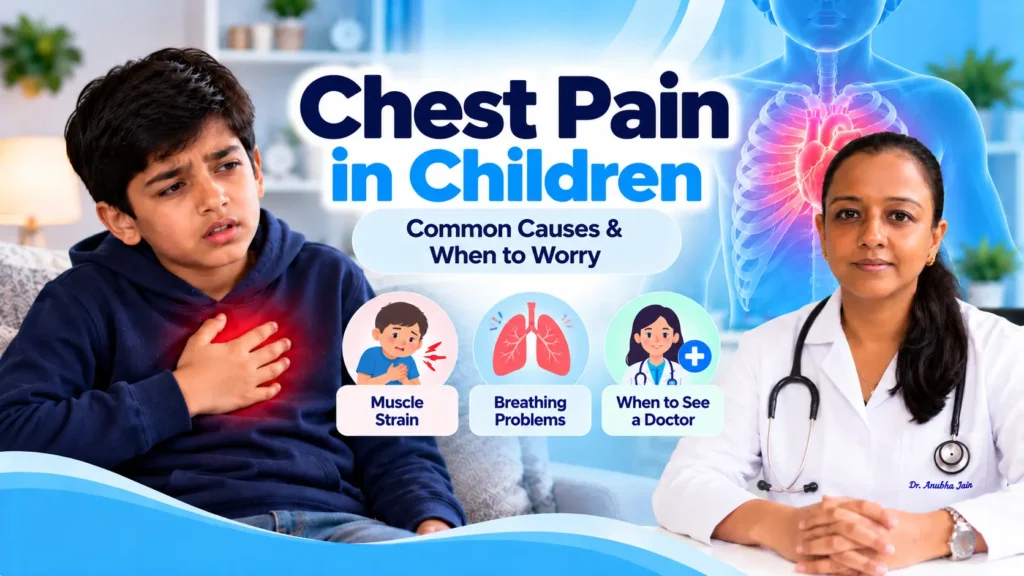
Chest Pain in Children can be frightening for parents, especially when a child suddenly complains that their chest hurts while playing, coughing or sitting quietly. Some children describe a sharp pain near the ribs, while others experience pressure, burning or discomfort that is difficult to explain.
Although most chest pain in school-age children is not caused by heart disease, parents should not automatically ignore it. Muscle strain, inflammation of the chest wall, frequent coughing, asthma and digestive problems are possible explanations. In less common situations, chest pain may indicate a serious heart or lung condition.
This guide explains common causes of childhood chest discomfort, how to recognize important symptom patterns, when exercise-related pain needs attention and which warning signs require emergency medical care.
Quick Answer for Parents
Most chest pain in children is related to the muscles, bones or cartilage of the chest rather than the heart. Coughing, sports-related strain, costochondritis and brief chest-wall pain can all cause discomfort.
However, chest pain during exercise, pain associated with fainting, persistent chest pressure or difficulty breathing should receive urgent medical evaluation.
Severe chest pain, collapse, blue or grey lips or serious breathing difficulty requires immediate emergency care.
What Does Chest Pain in Children Mean?
Chest pain refers to discomfort felt anywhere around the chest, including the area near the breastbone, ribs and upper back. Children may describe the sensation as sharp, tight, burning, aching or stabbing.
The chest contains muscles, ribs, cartilage, lungs, the heart and the food pipe. Irritation or problems involving several of these structures can produce discomfort.
The location of pain alone cannot reliably establish its cause. A pediatrician considers when the pain occurs, how long it lasts and whether other symptoms are present.
What Are the Common Causes of Chest Pain in Children?
Chest Wall Muscle Strain
Muscle strain is a frequent cause of chest pain in school-age children. It may develop after sports, carrying heavy objects, repeated upper-body activity or frequent coughing. Pain may become more noticeable when twisting the body or moving the arms.
Costochondritis
Costochondritis occurs when the cartilage connecting the ribs to the breastbone becomes inflamed or irritated. Children may feel pain near the center or side of the chest, particularly during certain movements or deep breathing.
Precordial Catch Syndrome
Precordial catch syndrome can cause sudden, localized, sharp chest pain that lasts for a short time. It often occurs at rest and usually resolves spontaneously. A clinician should confirm that the symptoms fit this pattern before parents assume the pain is harmless.
Frequent or Forceful Coughing
Repeated coughing during a cold can strain the muscles between the ribs and around the chest. A child may notice soreness when coughing, laughing or taking a deep breath.
Asthma and Breathing Problems
Some children with asthma describe chest tightness as pain. Coughing, wheezing or breathlessness during exercise may provide additional clues. New breathing difficulty requires prompt evaluation.
Acid Reflux and Digestive Irritation
Acid reflux may cause burning discomfort behind the breastbone, sometimes after meals or when lying down. However, parents should not assume chest pain is acidity without considering the child’s overall symptoms.
Heart-Related or Other Serious Conditions
Heart-related causes are uncommon in children but must be considered when pain occurs during exercise, is associated with fainting or palpitations, or occurs in a child with known heart disease or concerning family history.
Why Can Children Develop Chest Pain After a Cold?
During viral respiratory illnesses, frequent coughing can irritate chest-wall muscles. Children may notice pain when coughing, sneezing, laughing or changing position.
However, chest pain with fever, difficult breathing or worsening cough may sometimes indicate pneumonia or another lower respiratory problem.
Weather changes do not directly cause chest pain. Respiratory infections, airway sensitivity and physical strain are among the possible contributing factors during cooler months.
What Is Costochondritis in Children?
Costochondritis involves inflammation or irritation where the ribs connect to the breastbone. It can cause localized tenderness and pain that may worsen with certain movements.
In some children, pressing gently over the affected area reproduces the discomfort. However, tenderness does not exclude every serious condition, especially when other warning signs are present.
Treatment depends on examination findings. A clinician may recommend activity modification or age-appropriate pain relief when the diagnosis is consistent with chest-wall inflammation.
What Is Precordial Catch Syndrome?
Precordial catch syndrome is a recognized cause of brief, sharp chest pain in children and teenagers. It may occur suddenly while sitting or resting, often in a small, well-defined area.
The discomfort commonly lasts seconds to minutes and then disappears. It is not usually associated with serious heart disease.
Nevertheless, children with severe pain, fainting, difficulty breathing or exercise-related symptoms need assessment rather than being automatically labeled with this syndrome.
Chest Pain During Exercise in Children: Why Is It Important?
Chest pain that develops while running, playing sports or performing strenuous exercise is an important warning sign. Although some exercise-related discomfort can be muscular, clinicians also consider heart and respiratory conditions.
Children who experience chest pain during exercise should stop the activity and receive prompt medical assessment before returning to strenuous sports.
Important Warning Signs During Exercise
- Chest pain beginning while running or playing sports
- Chest pain with fainting or near-fainting
- Rapid or irregular heartbeat with discomfort
- Unexplained breathlessness or reduced exercise tolerance
- Known congenital heart disease
- Family history of unexplained sudden death or inherited heart disease
Chest pain accompanied by fainting, severe breathlessness or significant ongoing symptoms requires emergency evaluation.
Chest Wall Pain vs Possible Heart-Related Pain
There are no simple home tests that definitively distinguish these causes. The following clues help explain why the pattern matters.
| Feature | Possible Chest Wall Pain | Concerning Pattern |
|---|---|---|
| Trigger | Movement, coughing or muscle activity | Chest pain during strenuous exercise |
| Location | May be localized near ribs or breastbone | Location alone cannot determine risk |
| Tenderness | May occur with touching the chest | Other warning signs still need assessment |
| Other symptoms | May occur without other illness | Fainting, palpitations or breathing difficulty |
| Next step | Clinical review when unclear or persistent | Urgent or emergency evaluation |
Can Asthma Cause Chest Tightness or Pain?
Yes. Some children with asthma describe their breathing discomfort as pressure, tightness or pain in the chest. Symptoms may occur with coughing, wheezing or physical activity.
Asthma should be considered when chest tightness repeatedly accompanies exercise or nighttime respiratory symptoms. However, chest pain alone does not confirm asthma.
If the child already has an asthma diagnosis, follow their prescribed action plan. New or worsening breathing difficulty requires prompt medical assessment.
Related Pediatric Information
Children with recurring wheezing, nasal allergies or other allergic symptoms may benefit from evaluation. Visit Allergy in Children for more information.
Can Pneumonia Cause Chest Pain in Children?
Pneumonia is a lung infection that can produce fever, cough, rapid breathing and sometimes chest pain. Discomfort may be more noticeable when taking a deep breath.
However, not every child with chest pain and cough has pneumonia. Muscle strain from repeated coughing is another possibility.
Chest pain with fever, unusually fast breathing or worsening illness warrants prompt examination to determine whether a lower respiratory infection is present.
Can Acidity or Reflux Cause Chest Discomfort?
Gastroesophageal reflux may cause burning discomfort in the chest or upper abdomen. Some children notice symptoms after eating or when lying down.
Persistent reflux symptoms can interfere with meals or sleep and may require medical assessment.
Do not repeatedly give adult antacid medicines or other medications without age-appropriate pediatric advice.
Can Stress or Anxiety Cause Chest Pain?
Stress and anxiety can sometimes contribute to chest discomfort, rapid breathing or muscle tension. School-related worries or emotional distress may coincide with symptoms in some children.
However, parents should not assume that pain is psychological simply because a child is worried or anxious. Physical causes and warning signs still need appropriate evaluation.
Listening calmly to the child’s description of the pain can help the clinician understand the full situation.
What Should Parents Do When a Child Complains of Chest Pain?
First, stop strenuous activity and observe the child’s breathing, alertness and general condition. Ask when the pain started, whether it is severe and whether the child also feels dizzy or breathless.
Parent Observation Checklist
- Help the child sit or rest comfortably.
- Stop sports or strenuous exercise until the cause is assessed.
- Check whether breathing appears normal.
- Ask if the child feels dizzy or has palpitations.
- Observe whether coughing or movement worsens the pain.
- Record recent fever, respiratory symptoms or injuries.
- Seek medical advice for unexplained, recurrent or persistent pain.
- Arrange emergency care if serious warning signs are present.
Do not attempt to diagnose heart disease or muscle strain based only on where the child points. Avoid giving adult medicines or using unprescribed respiratory treatments.
When Should Parents Consult a Pediatrician?
A pediatrician should evaluate chest pain when its cause is uncertain, it occurs repeatedly or it is accompanied by other concerning symptoms.
Reasons for Medical Assessment
- Unexplained chest pain, especially if new or recurrent
- Chest discomfort associated with fever
- Pain after persistent coughing
- Chest pain affecting daily activities or sleep
- Pain occurring during exercise or sports
- Chest discomfort with wheezing or breathing changes
- Palpitations or reduced exercise tolerance
- Known heart disease or relevant family history
Chest pain during exercise requires prompt assessment even if it resolves with rest. Severe or ongoing pain, fainting or breathing difficulty should be treated as an emergency.
Pediatric Consultation in Varanasi
For assessment of childhood chest discomfort and associated symptoms, explore Pediatrician in Varanasi. The pediatrician can recommend cardiac or respiratory specialist evaluation when clinically indicated.
When Is Chest Pain in Children an Emergency?
Seek Immediate Emergency Care If Your Child Has:
- Severe or persistent chest pain or pressure
- Chest pain associated with fainting or collapse
- Difficulty breathing or struggling for each breath
- Blue or grey lips or face
- Chest pain with confusion or reduced responsiveness
- Significant chest pain with an abnormal or very rapid heartbeat
- Chest pain after a major injury
- Rapid deterioration or severe illness
These warning signs require immediate medical attention. Do not wait for a routine appointment or continue physical activity. Seek emergency services when serious symptoms are present.
How Does a Pediatrician Evaluate Chest Pain?
The pediatrician may ask where the pain occurs, how long it lasts, whether it happens during activity and whether there is a history of fever, coughing, injury or digestive symptoms.
The examination may include listening to the heart and lungs, checking vital signs and examining the chest wall.
When appropriate, the clinician may recommend an electrocardiogram (ECG), chest X-ray, blood tests or referral to a pediatric cardiologist. Not every child needs these tests; investigations should be selected according to the history and examination.
Does Every Child With Chest Pain Need an ECG?
No. ECG testing is not automatically necessary for all childhood chest pain. Many cases have a clear musculoskeletal explanation after a medical history and examination.
However, an ECG or specialist cardiac assessment may be appropriate if symptoms are associated with exertion, fainting, palpitations, abnormal examination findings or a concerning family history.
The clinician determines whether testing is required based on risk factors and the child’s symptoms.
Can Children Return to Sports After Chest Pain?
Return to physical activity depends on the cause of pain. A child with a confirmed minor muscle strain may return gradually when symptoms improve and the treating clinician considers activity appropriate.
Children who develop chest pain during exercise, fainting or unexplained palpitations should not return to competitive sports until they receive appropriate medical evaluation and clearance.
This precaution is particularly important when the cause has not yet been established.
How Can Parents Reduce Avoidable Chest Discomfort?
Not every episode is preventable. However, good exercise habits, proper recovery after respiratory illnesses and avoiding tobacco smoke may support overall chest and respiratory health.
Practical Child Health Habits
- Encourage age-appropriate physical activity.
- Use suitable warm-up and sports techniques.
- Allow recovery time after strenuous exercise.
- Avoid tobacco smoke and vaping exposure.
- Follow prescribed asthma management plans.
- Seek medical care for persistent cough and breathing symptoms.
- Do not ignore pain during sports.
- Keep regular pediatric follow-up when chronic conditions are present.
What Should Parents Record Before the Appointment?
Child Chest Pain Symptom Diary
- When and where the pain started
- Whether it happened during exercise or at rest
- How long each episode lasted
- Whether coughing or movement worsened the pain
- Any fever, wheezing or breathing difficulty
- Any dizziness, fainting or fast heartbeat
- Recent injury or strenuous sports activity
- Family history of unexplained sudden death or heart disease
This information can help the pediatrician identify patterns and decide whether further testing is needed. Do not delay emergency medical care to complete a symptom diary.
Consult Dr. Anubha Jain in Varanasi
Dr. Anubha Jain, MBBS, MD (Pediatrics), provides pediatric consultations at Samaria Multi-Speciality & Chest Centre in Kabir Nagar, Durgakund, Varanasi.
Parents concerned about recurring chest discomfort, cough-related pain, breathing symptoms or other childhood health problems may seek initial pediatric assessment. The need for cardiac investigations, respiratory testing or specialist referral depends on the child’s symptoms and clinical examination.
Clinic Information
Doctor: Dr. Anubha Jain
Qualifications: MBBS, MD (Pediatrics)
Location: Samaria Multi-Speciality & Chest Centre
Address: Plot 36A, Kabir Nagar, Durgakund, Varanasi – 221005
Contact: +91 9454643742
Appointments: Contact Dr. Anubha Jain
Frequently Asked Questions About Chest Pain in Children
Is chest pain in children usually serious?
Most childhood chest pain is not caused by heart disease. Muscle strain and chest-wall conditions are common, but warning signs still require medical evaluation.
Can a child have chest pain from coughing?
Yes. Frequent coughing can strain the chest muscles and cause soreness. However, fever or difficulty breathing with chest pain may suggest another cause.
What is costochondritis in children?
Costochondritis involves irritation or inflammation of cartilage connecting the ribs to the breastbone. It may cause localized chest discomfort.
Is sharp chest pain near the heart always dangerous?
No. Some brief, localized pain episodes are caused by chest-wall conditions such as precordial catch syndrome. A clinical assessment is important when symptoms are unexplained.
Should I worry about chest pain during running?
Yes. Chest pain during exercise is an important warning sign and needs prompt medical evaluation before the child returns to strenuous activity.
Can asthma cause chest pain?
Asthma can cause chest tightness that children may describe as pain. Associated cough, wheezing or breathlessness can provide additional clues.
Does every child with chest pain need an ECG?
No. ECG testing depends on the child’s symptoms, examination and risk factors. Exercise-related pain, fainting or palpitations may require cardiac evaluation.
When should parents seek emergency care for chest pain?
Seek emergency care for severe or persistent pain, fainting, breathing difficulty, blue lips, confusion or collapse.
Additional Respiratory Health Information for Parents
Children experiencing persistent cough, wheezing, asthma symptoms or recurring breathing problems may require medical evaluation.
For additional information about respiratory health, visit Samaria Multi-Speciality & Chest Centre, Varanasi.
Located in Kabir Nagar, Durgakund, Varanasi, the centre provides information about respiratory care and services including asthma management, pulmonary function testing, bronchoscopy, COPD care and other chest-related conditions.
The specialist team also includes Dr. Anubha Jain, Senior Consultant Pediatrician & Child Specialist.
Website: https://chestclinicvns.com/
Address: Plot 36A, Kabir Nagar, Durgakund, Varanasi – 221005.
Contact: +91 8795300333
Note: This resource provides information about respiratory healthcare. Children with severe breathing difficulty require immediate emergency medical attention.
Conclusion: Understanding Chest Pain in Children
Chest pain in children is often caused by muscle strain, coughing, costochondritis or other non-cardiac conditions. However, parents should pay attention to the circumstances in which pain occurs and whether other symptoms are present.
Chest pain during exercise, pain with fainting, persistent pressure and serious breathing difficulty require prompt or emergency evaluation. Medical assessment can help identify the cause and guide safe treatment or specialist referral.
For pediatric consultation information in Varanasi, visit Pediatrician in Varanasi.
Request Pediatric Consultation
Medical Disclaimer: This article is for general educational purposes only. It does not replace professional medical diagnosis, cardiac assessment, specialist care or emergency treatment.